What Is Cloud Technology? A Beginner’s Guide (2026)
Technology has transformed the way we live, work, and communicate. From watching movies on Netflix to storing files on Google Drive or collaborating with your team through Microsoft 365, cloud technology has become an essential part of our daily lives. Yet, many people still wonder, what is cloud technology, and why is everyone talking about it?
Simply put, cloud technology allows you to access data, applications, and computing resources over the internet instead of relying on a physical computer or local server. It makes technology more flexible, cost-effective, and accessible for both individuals and businesses.
Today, organizations of all sizes are moving to the cloud to improve productivity, reduce infrastructure costs, and support remote work. As a result, the demand for cloud professionals is growing rapidly, making cloud computing one of the most promising career fields in 2026.
Whether you’re a student, a working professional, or someone planning to switch careers, understanding what is cloud technology is the first step toward building a strong foundation in this fast-growing industry.
In this beginner-friendly guide, you’ll learn what cloud technology is, why it is important, the different types of cloud technology, career opportunities, and how you can start your journey in cloud computing.
What Is Cloud Technology?
Cloud technology is the delivery of computing services such as servers, storage, databases, networking, software, and computing power over the internet instead of using physical hardware installed at your home or office.
In simple words, cloud technology allows you to store data, run applications, and access digital services from anywhere with an internet connection.
Think of it this way—years ago, if you wanted to save your important files, you had to store them on your computer’s hard drive or a USB device. Today, you can simply upload those files to Google Drive, OneDrive, or Dropbox and access them anytime, from any device. This is one of the simplest examples of cloud technology in action.
Instead of buying expensive servers and maintaining them, businesses can rent computing resources from cloud providers whenever they need them. This not only reduces costs but also makes it easier to scale operations as the business grows.
Real-Life Examples of Cloud Technology
You probably use cloud technology every day without even realizing it. Here are a few common examples:
- Google Drive lets you store and access files online from anywhere.
- Microsoft 365 allows multiple people to work on the same document in real time.
- Netflix uses cloud infrastructure to stream movies and TV shows to millions of users worldwide.
- Spotify stores and delivers music through cloud-based servers.
- Google Photos automatically backs up your photos and videos, making them available across all your devices.
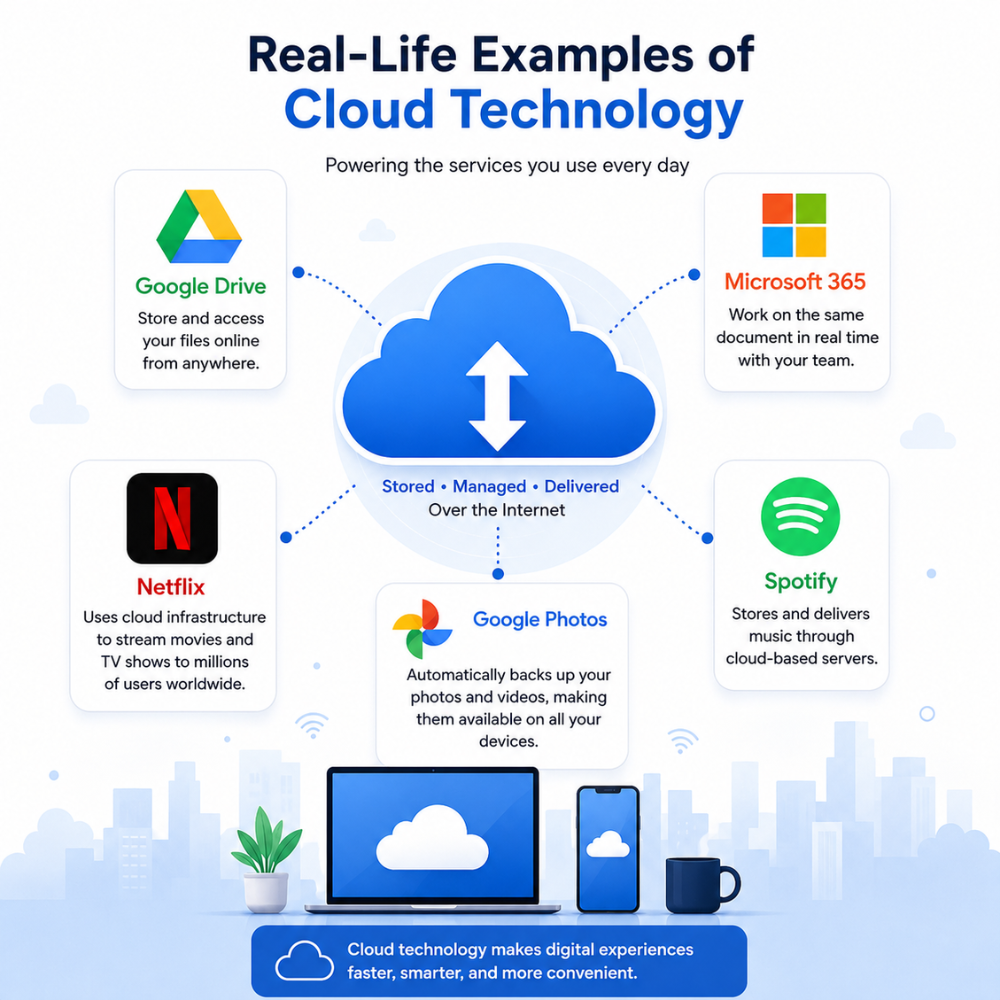
These services show how cloud technology has become a part of our everyday lives by making digital experiences faster, smarter, and more convenient.
💡 Did You Know?
According to industry trends, businesses across finance, healthcare, education, e-commerce, and manufacturing are rapidly adopting cloud technology to improve efficiency, enhance security, and support digital transformation. This growing adoption is also creating thousands of new career opportunities for cloud professionals every year.
Why Is Cloud Technology Important?
Now that you understand what is cloud technology, let’s look at why it has become so important in today’s digital world.
Earlier, businesses had to invest heavily in physical servers, networking equipment, and IT infrastructure to store data and run applications. Setting up and maintaining this infrastructure required significant time, money, and technical expertise.
Cloud technology has changed this approach completely. Instead of purchasing expensive hardware, businesses can now use cloud services whenever they need them and pay only for the resources they consume.
This flexibility allows organizations to focus more on innovation and business growth rather than managing complex IT systems.
Today, cloud technology is used across almost every industry, including healthcare, banking, education, e-commerce, manufacturing, and entertainment. From small startups to global enterprises, organizations rely on cloud platforms to improve efficiency, secure their data, and deliver better services to customers.
As remote work and digital transformation continue to grow, cloud technology has become an essential part of modern business operations rather than just an optional technology.
Top Benefits of Cloud Technology

One of the biggest reasons behind the growing popularity of cloud technology is the wide range of benefits it offers to both businesses and individual users. Here are some of the most important advantages:
1. Access Your Data from Anywhere
Cloud technology allows you to access your files, applications, and business data from any location with an internet connection. Whether you’re working from home, travelling, or collaborating with a team in another city, your information is always available whenever you need it.
2. Lower Infrastructure Costs
Setting up physical servers and maintaining an IT infrastructure can be expensive. Businesses need to purchase hardware, software, storage devices, and networking equipment while also paying for maintenance and upgrades. With cloud technology, companies only pay for the services they use, helping them reduce operational costs and make better use of their budgets.
3. Easy Scalability
Every business grows at a different pace. Sometimes additional storage or computing power is required during peak business periods. Cloud technology makes it easy to increase or decrease resources within minutes without purchasing new hardware. This flexibility helps businesses adapt quickly to changing demands.
4. Better Data Security
Leading cloud providers invest heavily in cybersecurity to protect customer data.
Most cloud platforms include advanced security features such as:
- Data encryption
- Multi-factor authentication (MFA)
- Regular security updates
- Identity and access management
- Automatic monitoring
These features help businesses keep their information secure and reduce the risk of cyber threats.
5. Faster Collaboration
Cloud-based applications allow multiple users to work on the same document or project at the same time. For example, a marketing team can edit a presentation in Microsoft 365, while another team member reviews it remotely. This improves teamwork, saves time, and increases productivity.
6. Reliable Backup and Disaster Recovery
Unexpected events such as hardware failures, accidental file deletion, or cyberattacks can lead to data loss. Cloud technology automatically backs up important data and provides disaster recovery solutions, allowing businesses to recover information quickly and continue their operations with minimal downtime.
7. Automatic Updates
Traditional software often requires manual installation of updates and security patches.
With cloud-based services, updates are handled automatically by the service provider, ensuring users always have access to the latest features, performance improvements, and security enhancements without additional effort.
Quick Overview of Cloud Technology Benefits
| Benefit | Why It Matters |
|---|---|
| Anywhere Access | Work from any location with an internet connection |
| Cost Savings | No need for expensive hardware and maintenance |
| Scalability | Increase or reduce resources as your business grows |
| Data Security | Advanced protection against cyber threats |
| Collaboration | Teams can work together in real time |
| Automatic Backup | Protects important business and personal data |
| Automatic Updates | Always use the latest and most secure software versions |
Types of Cloud Technology
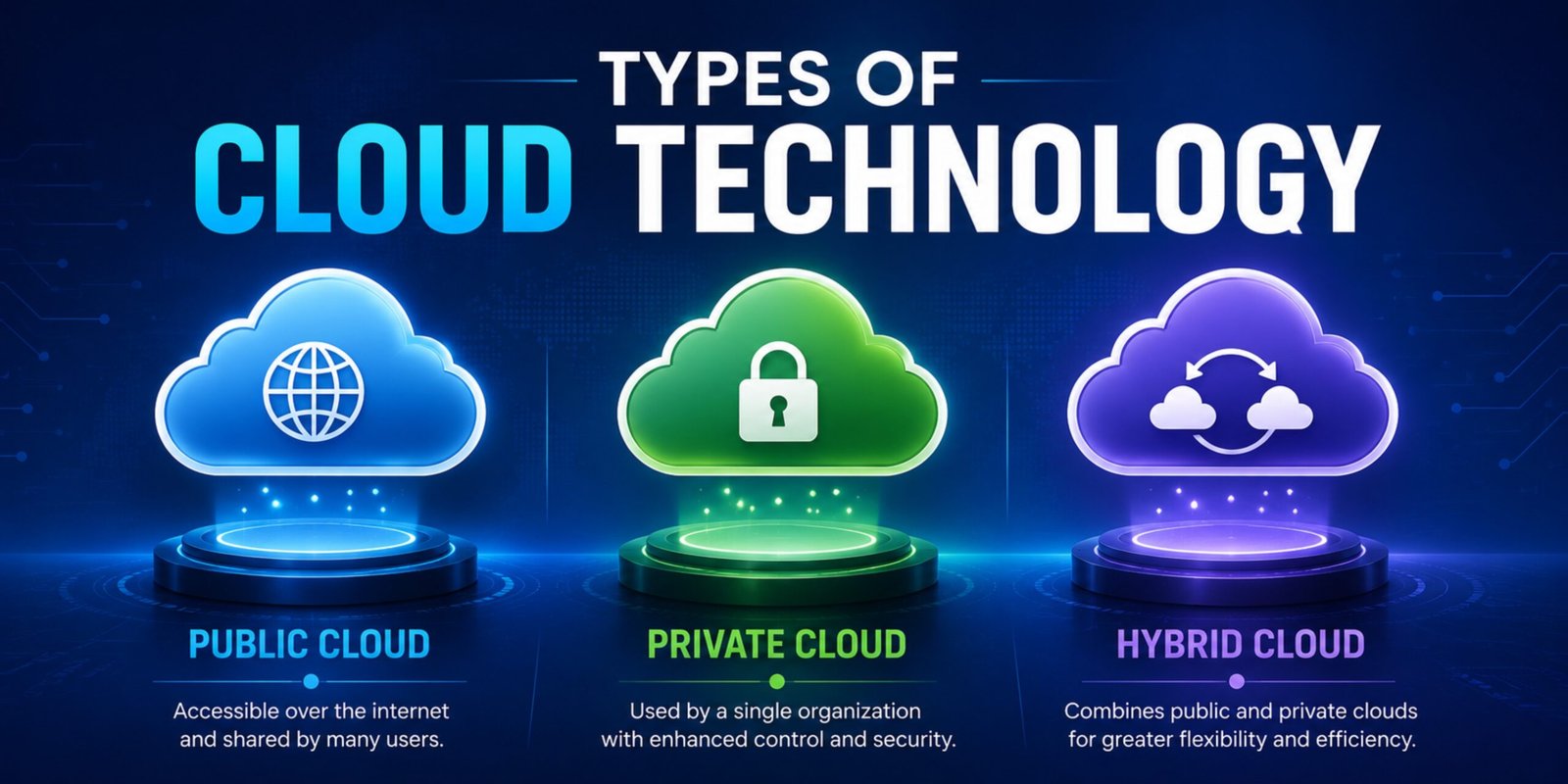
Cloud technology is generally divided into three main types based on how cloud services are deployed. Each type is designed to meet different business needs depending on factors like security, flexibility, and cost.
1. Public Cloud
A Public Cloud is owned and managed by third-party cloud service providers such as Amazon Web Services (AWS), Microsoft Azure, and Google Cloud Platform (GCP). In this model, cloud resources are shared among multiple users, making it one of the most affordable and scalable cloud solutions available today. Public cloud is widely used by startups, small businesses, and even large enterprises because it offers flexibility without requiring businesses to invest in expensive hardware.
Key Features:
- Cost-effective pricing
- Easy to scale resources
- No hardware maintenance
- Accessible from anywhere with an internet connection
2. Private Cloud
A Private Cloud is dedicated to a single organization. Unlike the public cloud, its resources are not shared with other businesses or users. This type of cloud provides greater control, higher security, and better customization, making it suitable for organizations that handle sensitive or confidential information. Industries such as banking, healthcare, and government often prefer private cloud environments to meet strict security and compliance requirements.
Key Features:
- Higher security and privacy
- Greater control over infrastructure
- Customizable according to business needs
- Ideal for organizations handling sensitive data
3. Hybrid Cloud
A Hybrid Cloud combines both public and private cloud environments. This approach allows businesses to keep sensitive data in a private cloud while using the public cloud for less critical workloads or additional computing resources during peak demand. Hybrid cloud offers the perfect balance between flexibility, performance, and security, which is why many modern organizations are adopting this model.
Key Features:
- Combines the benefits of public and private cloud
- Better flexibility for growing businesses
- Improved security for critical data
- Cost-effective resource management
Cloud Technology Types at a Glance
| Cloud Type | Best For | Main Advantage |
|---|---|---|
| Public Cloud | Startups and small businesses | Affordable and highly scalable |
| Private Cloud | Large organizations | Better security and control |
| Hybrid Cloud | Growing enterprises | Balance of flexibility and security |
Career Opportunities in Cloud Technology
As more businesses move their operations to the cloud, the demand for cloud professionals continues to grow. Companies across industries are looking for skilled individuals who can manage cloud platforms, secure business data, and support digital transformation initiatives.
As more businesses move their operations to the cloud, the demand for cloud professionals continues to grow. Companies across industries are looking for skilled individuals who can manage cloud platforms, secure business data, and support digital transformation initiatives.
Some of the most popular job roles include:
- Cloud Engineer
- Cloud Administrator
- Cloud Solutions Architect
- Cloud Security Engineer
- DevOps Engineer
- Cloud Consultant
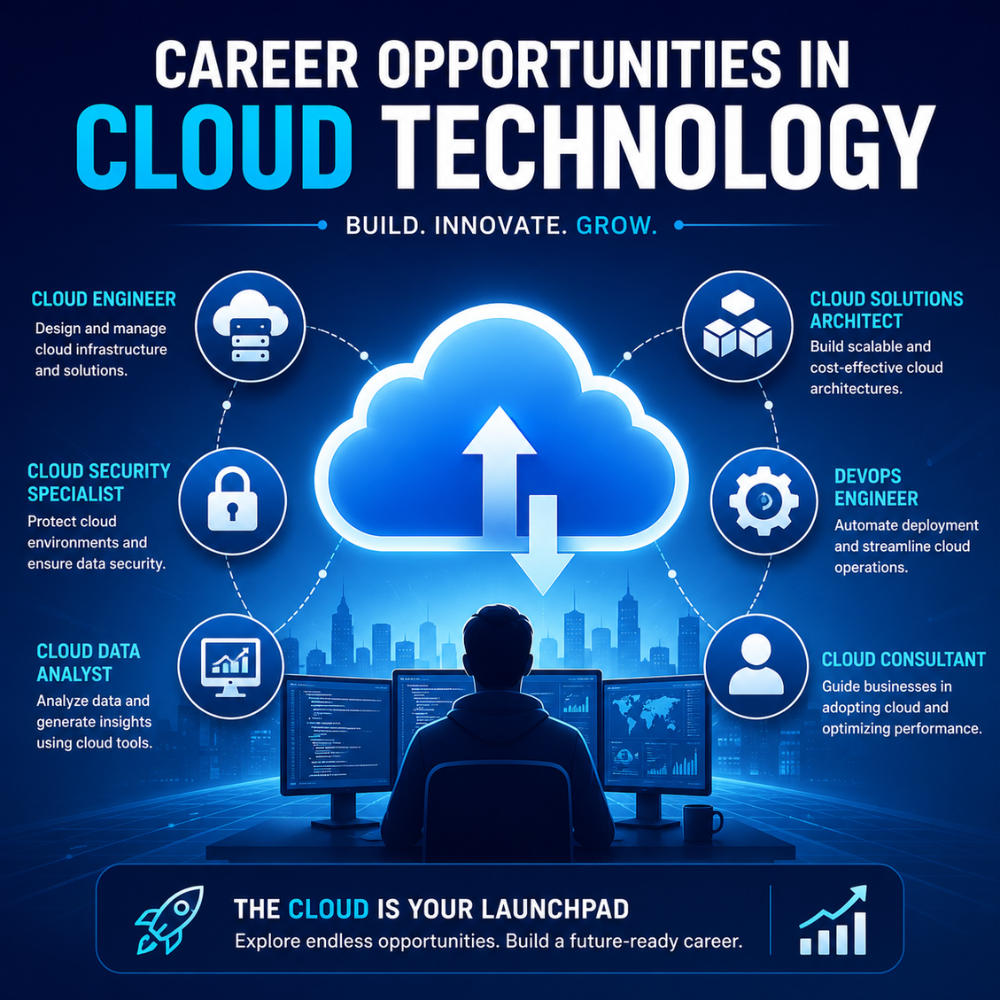
These professionals work with leading cloud platforms such as AWS, Microsoft Azure, and Google Cloud Platform (GCP) to help organizations build secure, scalable, and efficient cloud environments.
The demand for cloud professionals is expected to remain strong in the coming years as businesses continue investing in digital transformation, artificial intelligence, big data, and cloud-based infrastructure.
💡 Thinking About a Career in Cloud Technology?
If you’re interested in building practical cloud skills, start with the fundamentals and gradually explore platforms like AWS, Microsoft Azure, and Google Cloud. Hands-on practice, real-world projects, and expert guidance can help you build the confidence needed to begin your career in cloud computing.
How to Start Learning Cloud Technology
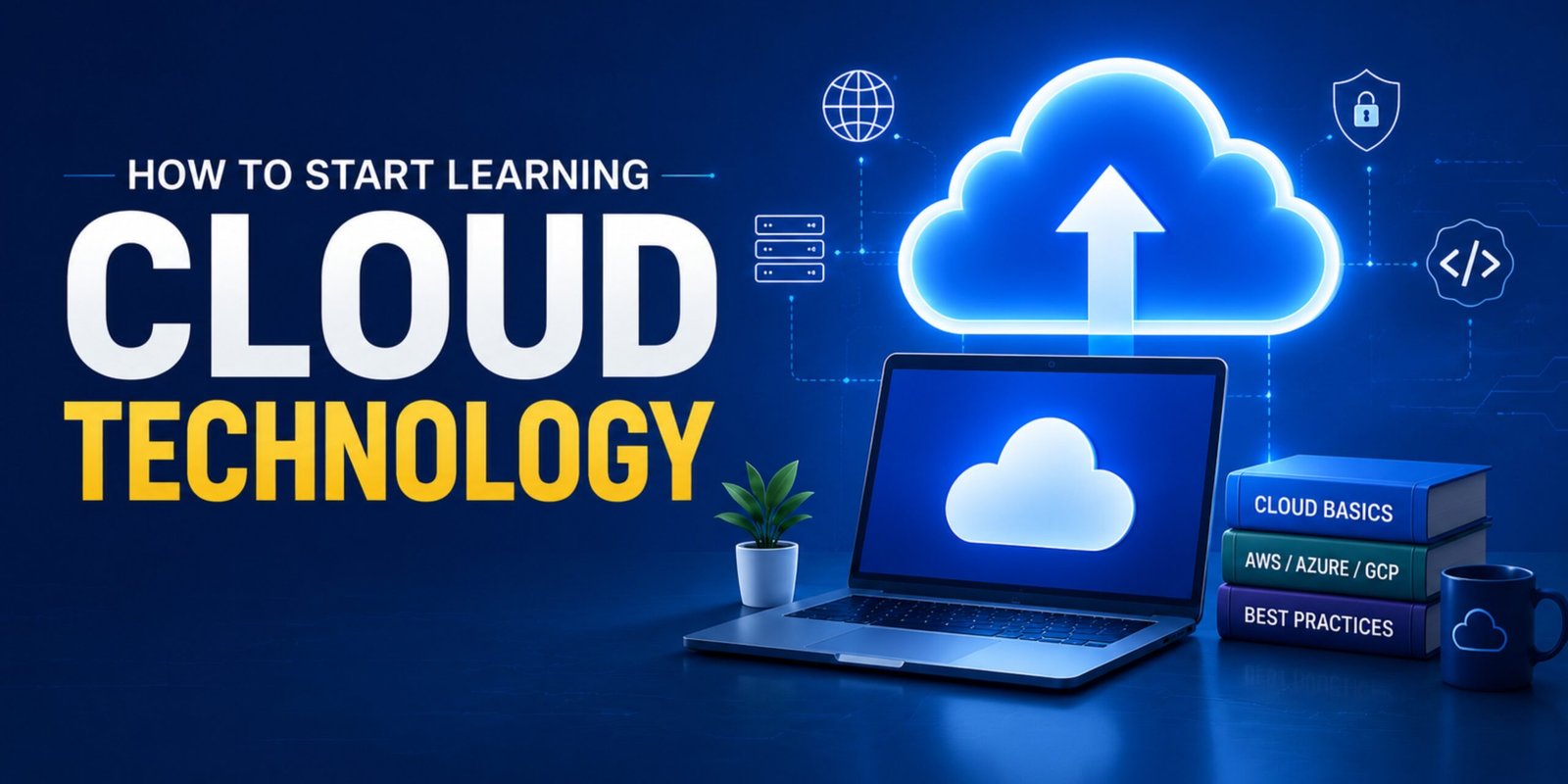
If you’re completely new to cloud computing, don’t worry. You don’t need to become an expert overnight. The best way to learn cloud technology is by building a strong foundation and progressing step by step.
Here’s a simple roadmap for beginners:
1. Learn the Basics of Cloud Computing
Start by understanding fundamental concepts such as cloud technology, virtualization, networking, storage, and how cloud platforms work.
2. Choose a Cloud Platform
Select one of the leading cloud platforms to begin your learning journey:
- Amazon Web Services (AWS)
- Microsoft Azure
- Google Cloud Platform (GCP)
Each platform offers beginner-friendly learning resources and free-tier services to help you practice.
3. Practice with Real Projects
Theory alone isn’t enough. Create small projects such as hosting a website, storing files in cloud storage, or deploying a simple application. Practical experience helps you understand cloud concepts much faster.
4. Learn from Industry Experts
A structured learning program with experienced mentors can help you understand concepts more efficiently while giving you exposure to real-world projects and industry best practices.
Is Cloud Technology a Good Career in 2026?
Yes, absolutely.
Cloud technology has become one of the fastest-growing areas in the IT industry. As businesses continue adopting digital solutions, the need for skilled cloud professionals is increasing every year.
Whether it’s startups, multinational companies, healthcare organizations, banks, or e-commerce businesses, almost every industry relies on cloud platforms to improve efficiency and manage their digital infrastructure.
For students, fresh graduates, and working professionals looking to upskill, cloud technology offers excellent career opportunities, competitive salaries, and long-term growth.
If you’re interested in building a future-ready career, learning cloud technology today can be a smart investment for tomorrow.
Conclusion
Understanding what is cloud technology is the first step toward exploring one of today’s most exciting and rapidly growing technology domains. From improving business operations to enabling remote work and supporting digital transformation, cloud technology has become an essential part of modern organizations.
As cloud adoption continues to grow, professionals with cloud computing skills will remain in high demand across industries. By learning the fundamentals, gaining hands-on experience, and working on practical projects, you can build the confidence needed to pursue a successful career in cloud technology.
If you’re ready to move beyond the basics and develop practical cloud skills, The Data Training’s Best Cloud Technology Course in Gurgaon offers hands-on learning, real-world projects, and expert mentorship to help you become job-ready.
